Maintenance should match the equipment and installation.
A generic flush is not a complete maintenance plan. The useful scope depends on the exact model, water quality, venting, condensate, combustion system, filters, pumps, controls, and the manufacturer’s instructions.
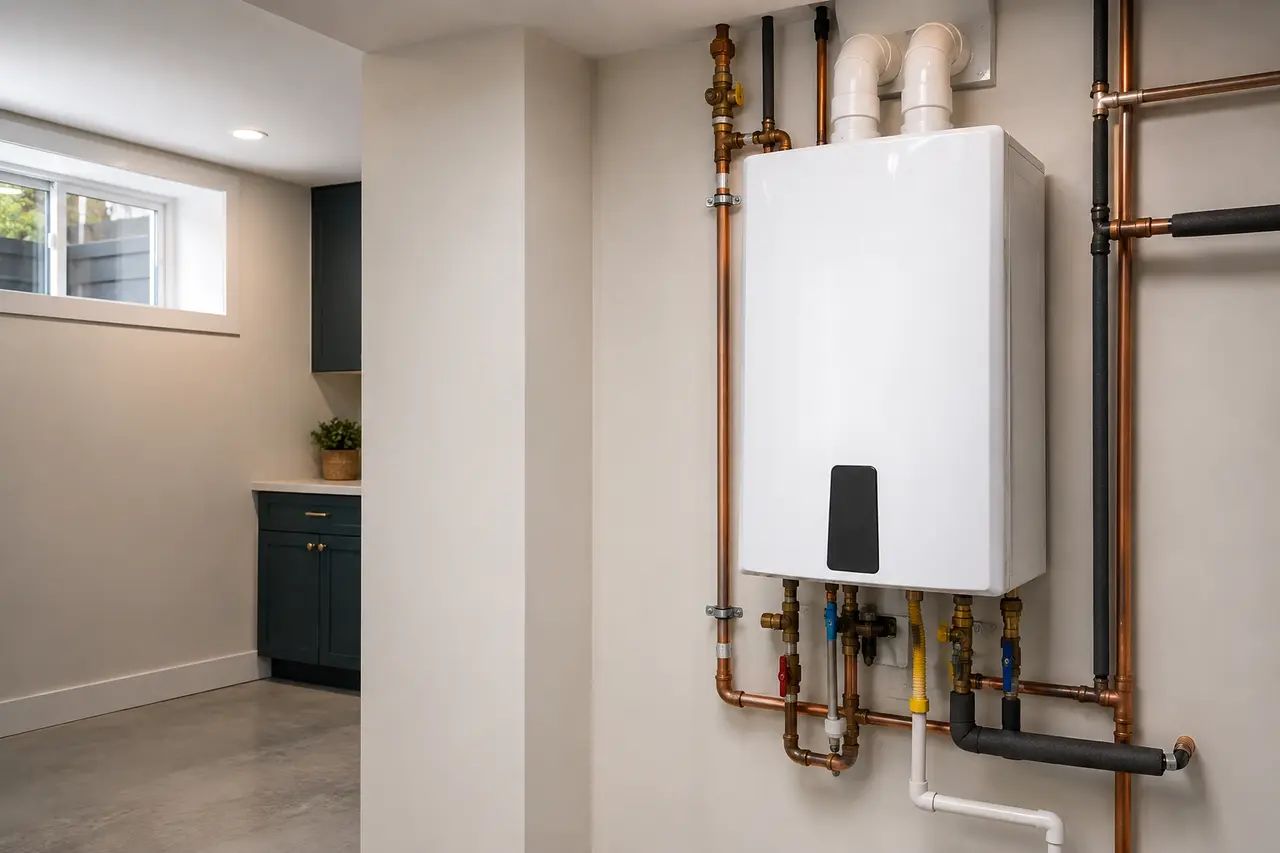
Start with the manual and service record
Record the full model and serial information, installation date, last service date, prior codes, replaced parts, water-treatment equipment, and any current symptom. Maintenance intervals and procedures vary by manufacturer and model.
Tankless systems
A qualified service scope may include inspection of accessible venting and condensate components, inlet filtration, water quality and scale conditions, combustion performance where applicable, error history, isolation valves, and safe operation after service.
Boiler and combi systems
The review may include pressure behavior, expansion control, fill and backflow equipment, pumps, air removal, relief discharge, condensate, controls, safeties, combustion testing where applicable, and zone operation.
Maintenance documentation
Ask for a written record of observed conditions, measurements, work performed, parts used, unresolved findings, and the next recommended interval. Good records make recurring faults and warranty questions easier to evaluate.
Before you request service
How often should a tankless unit be serviced?
Use the interval in the unit manual and adjust for water quality, operating hours, installation conditions, and prior findings.
Does maintenance guarantee a unit will not fail?
No. Maintenance reduces avoidable risk and documents condition, but it cannot eliminate equipment failure.
Can I request maintenance for multiple units?
Yes. Include the property type, number of units, equipment schedule, access conditions, and available service history.